

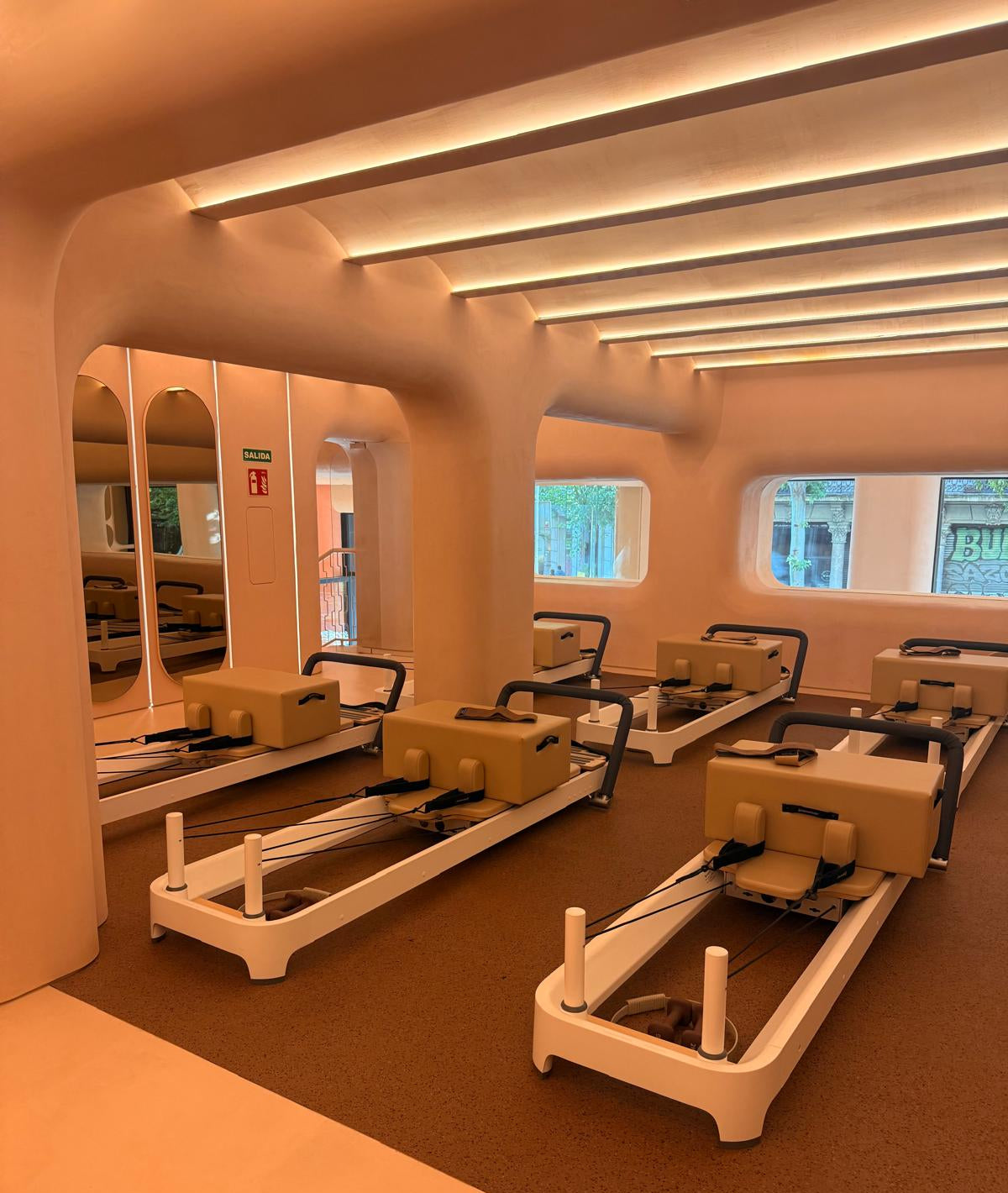
Designing your reformer pilates studio
A well-planned layout is the backbone of a successful studio: safer classes, smoother flow, fewer headaches. It can’t just be about how the space looks — it also has to work well in practice. Not sexy, but wildly underrated.
Short answer: design your reformer Pilates studio by balancing layout, flow, and premium Reformer Pilates Machines. Keep reading to learn how to create a space that feels as good as it looks.
If you're sourcing equipment, explore these Reformer Pilates Machines.
You can also view our entire studio set-up service offering here.
Or, stay with me and keep reading for all the best guidance on laying out and designing your studio!
A clear how-to guide for designing your reformer Pilates studio - is there such a thing?
Whenever I start working with new clients, one of the first things we discuss is studio layout. And really, it's a true balancing act. Of course, you’re considering how to get the most reformers in the room as possible, whilst still keeping the integrity of the flow, and atmosphere you want to create intact. But there’s also lighting, mirrors, teacher fluidity, and access to other accessories needed during the class.
In my experience, there is no right answer. You can layout your studio however you want. I’ve worked in countless studios, each with a unique layout and flow. With that being said, let’s take a look through some rough rules, guidelines, and ideas…
Planning Your Floor Plan: Spacing Essentials
Calculating Capacity: The 8 m² Rule & How Many Reformers Can Your Square Footage Support?
Allow enough space for each machine. Around 8 m² per reformer is a useful guide. Too many machines can make the room feel cramped, but more importantly, giving clients enough space improves comfort and the overall experience of the class. Nothing annoys me more during a class than when I have to wait for the person next to me to get to a certain point in their circle (foot in straps) before I can start on mine (If you know, you know…)
Essential Clearances for Safe Instructor Movement and Client Transitions
Leave clear walkways between reformers. Your instructors need space to move and guide clients. Tight spaces can interrupt the flow of a class, while open areas also make sessions feel calm and controlled.
Maximising Flow: Strategic Placement of the Reception and Waiting Area
Something people often forget when they design their studios is the reception to reformer journey! Think about how clients move through your studio. The path from entrance to workout space should feel simple and clean. A well-placed reception area helps clients settle in quickly. Small details here can shape the first impression. Where do people put shoes, water bottles, and bags? Is there a designated area for accessories you might need during class, and can you actually access it mid-session?
I used to go to a studio that stored the jump boards in the far back corner of the room, so retrieving one meant either climbing over the reformer of some poor unsuspecting rookie who didn’t know the drill yet, or forcing that rookie to stand up and distribute jump boards to the class like the studio’s unpaid intern! Which takes me to my next point….

Optimising Equipment Placement for Better Instruction!
Where you place your equipment affects how well classes run. Exhibit A above, but there’s plenty more examples I could list, for instance, if you need to hand out equipment, can you reach everyone without having to stretch?
The Mirrored Wall: Choosing the Best Angle for Form Correction
Mirrors can help clients improve alignment, technique, and confidence — but more mirrors doesn’t always mean a better experience. Having worked in studios with mirrors both at the front and sides of the reformers, I don’t think the placement matters nearly as much as people assume. Classes usually involve enough movement and variation that clients will get the chance to check their form either way.
It also comes down to the vibe of your studio. If you’re running more of a lights-down, music-up experience, mirrors become far less important — and for some clients, less distracting too!
Linear vs. Staggered Layouts: Which One Fits Your Studio Shape?
Personal preference, but things to consider… Straight lines can feel a little rigid, people can end up comparing their timing, or their abilities to the reformer next to them. I don’t love being totally in line with others due to timing and pacing myself, (and the aforementioned foot in straps fear of kicking my pal to my right) but that’s my personal preference! A staggered layout often creates more space and a softer look, but you may not be able to get as many machines in this way, or it might create a slightly clunkier flow to the studio when walking through and around it.
Vertical Storage Solutions for Props, Boxes, and Jump-boards
Clutter can break focus. Wall storage keeps props organised and off the floor. Using vertical space helps maintain a clean and open environment. You need people to be able to access props or accessories mid session with minimal disruption.
Creating a High-End Ambience Through Lighting and Colour
The atmosphere of the studio 100% shapes how clients feel during each session. I can truly say this with my chest. I’ve probably worked in over 30 different studios (I love trying out new places) and how I feel about the class afterwards and whether I'll return is so much more than just one thing. It’s the teacher, the style of class, the reformer, and THE VIBE.
Maximising Natural Light Without Compromising Client Privacy
Natural light makes a space feel larger, calmer, and more inviting, which is why large windows are often a great design choice. The challenge is balancing that openness with client privacy. I regularly walk past a sleek Lagree Fitness studio, and I can’t help feeling a bit sorry for the person fighting for their life on the Megaformer — sweating, shaking, and staring out at passers-by who are very much staring back!
Layered Lighting: Using Dimmable LEDs for Restorative vs. Power Classes
Avoid harsh ceiling lights. Use softer, layered lighting that can be adjusted. Dimmable options help match the mood of each class, and in my opinion are non-negotiable.
Selecting a "Zen" Palette: Neutral Tones and Natural Materials
Undoubtedly, branding plays a huge part in your colour scheme, but typically I would suggest choosing soft tones like beige, sage, or muted blue. These colours support a calm environment. Natural materials such as wood or stone add warmth and balance the look of metal equipment if you opt for an aluminium reformer!

Managing the Sensory Experience: Soundproofing and Scents
As I mentioned above, the small details can shape the full experience, and this even includes smells and sounds!
Acoustic Treatments to Minimise Echo During Guided Instruction
Echo can make instructions harder to follow, and also really affects the intimate feel of the class and the studio. Soft furnishings or panels can reduce this and if you have an echoey space, are going to be key to making your studio feel cosy.
Creating a "Signature Scent" with Safe, Non-Allergenic Aromatherapy
I know this one feels OTT, but a subtle scent can really enhance the atmosphere. Keep it light and fresh. Avoid anything too strong or overpowering. A class I attended just this week didn't use anything during the class, but in the last 10 minutes, while we were feet-in- straps stretching, the instructor lit some incense - it was genius! It created such a calming wind-down and meant you really noticed it, and created a happy memory. Top Tip!
Speaker Systems: Designing Your Class Through Music
With all the will in the world, a reformer class is never going to be relaxing unless there’s some form of background music. We’ve got reformers creaking (or not, if you choose the right one!), knees creaking, breathing, carriages, outdoor noise, the list goes on… having a speaker or integrated music system so you can style and pace your classes through sound is imperative!
Incorporating Modern Technology into Your Design
Technology can improve both teaching and client experience.
Integrated Audio Systems for Balanced Sound Distribution
If you’re working in a large studio, a good sound system keeps instructions clear across the room. Even sound helps maintain focus during sessions and keeps the experience feeling natural, e.g. no one's having to peek up from an exercise to hear you better!
Wall-Mounted Screens for Hybrid or Video-Assisted Sessions
This is a relatively new addition in the reformer space, but one I’ve seen used effectively depending on the class style. Screens allow you to offer virtual or guided sessions, or simply provide an additional visual aid during class.
If a class is full and you don’t want to interrupt the flow by moving someone off their reformer to demonstrate a movement, you can just pull it up on screen — a “here’s one I did earlier” approach.
It adds flexibility to your studio and can also help future-proof your business as teaching styles and client expectations evolve.
Essential Infrastructure: Flooring, Sound, and Climate
The technical side of your studio matters just as much as the design.
Professional Flooring Options: Safety Meets Durability
Your flooring should support movement and handle daily use, and whilst your clients will be wearing grippy socks, you still don’t want anything they can slip on!
Non-Slip Surfaces and Why They Matter for Standing Reformer Work
Non-slip flooring helps prevent accidents. It is especially important for standing exercises. A stable surface builds confidence during sessions.
Ease of Cleaning: Sanitisation Standards for High-Traffic Studios
Studios need regular cleaning. Choose materials that are easy to maintain. A clean space helps build trust with your clients.
Scaling for Success: Small Space and Multi-Purpose Solutions
You do not need a large studio to create a great experience. Smaller spaces can still feel premium with the right setup.
The Benefits of Folding Reformers and Stackable Equipment
Flexible equipment makes it easier to adapt your space. Folding or stackable options work well in compact studios. They help you get more use from a smaller area.
Using Multi-Functional Furniture for Storage and Seating
Choose furniture that serves more than one purpose. Storage benches or modular units are useful. This keeps the space tidy without losing function.
Temperature Control and Ventilation
Comfort plays a big role in performance - this is an obvious one!
The Ideal Studio Temperature for Muscle Warm-up and Cooling
Keep the room slightly warm but not too hot. This helps muscles stay flexible. Clients should feel comfortable throughout the session.
Improving Airflow in Small Spaces and Basements
Good airflow keeps the space fresh. Fans or ventilation systems can help. Fresh air improves both comfort and energy levels.


