

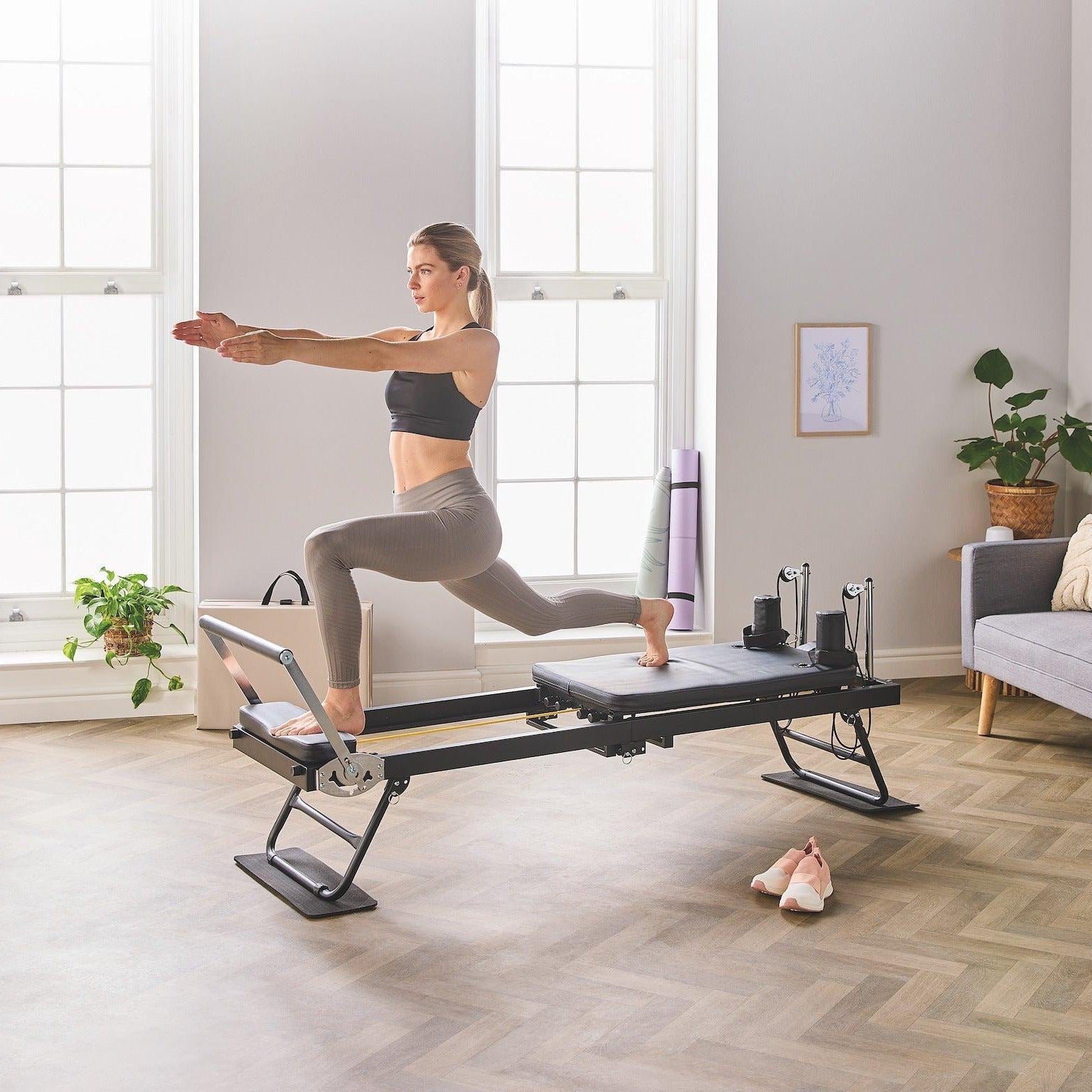
Reformer Pilates Machines look effortless until you try one. So, are there any negatives to reformer Pilates?
Technically, there are some drawbacks, namely - cost, space, and a learning curve. But they are not always dealbreakers!
Keep reading to see if these downsides actually matter for you.

Are there any negatives to reformer Pilates?
Many people see Reformer Pilates as a great way to build core strength and improve flexibility.
However, it is worth checking whether it fits your lifestyle and budget. Looking beyond the hype helps you make a better decision.
Before buying a machine, there are a few practical things to consider. Cost and space are two of the biggest drawbacks, especially for home use.
Beginners may also find it difficult without proper guidance in a studio.
Understanding the downsides helps you decide if it is right for you. It also makes it more likely that you will stick with it long term.
The Financial Investment: Classes and Equipment Costs
Why Reformer Pilates is more expensive than Mat Pilates
One of the main barriers is cost. Studio classes tend to be more expensive than mat sessions.
This is because classes are smaller and require specialist equipment.
The high cost of purchasing a home Reformer machine
Setting up a home studio can cost thousands of pounds. High-quality machines are built to last, but the upfront price can be a sticking point for many people.
Accessibility and Convenience Challenges
Finding specialised studios in your local area
Having access to a good instructor is important. That said, it can be difficult to find studios in smaller towns or rural areas. This limits access for many people across the UK.
Space requirements for home setups
Reformer machines are large and quite heavy. They take up a fair amount of floor space, which is not always practical in UK homes. This is often overlooked when people consider buying one.
Physical and Health Considerations
Limited cardiovascular benefits (compared to aerobic exercise)
Reformer Pilates is not designed to raise your heart rate for long periods. It focuses more on control and strength than cardio fitness. You may need to add walking, cycling, or swimming for a balanced routine.
Risks for specific conditions (pregnancy, spinal issues, and osteoporosis)
It is not suitable for everyone. If you have certain health conditions or injuries, it is best to check with a GP or specialist before starting.
The "repetitive" nature of basic Reformer sequences
Some people find the movements quite repetitive. While this helps build control, it may feel less engaging compared to faster-paced workouts.

Navigating the Learning Curve for Beginners
Understanding springs, pulleys, and the sliding carriage
The machine includes springs, pulleys, and a moving carriage. This setup can feel confusing at first, especially if you are new to it.
The "intimidation factor" of the equipment
For beginners, the machine can look quite technical. This can make it feel intimidating compared to simple mat exercises.
The Importance of Professional Guidance
Why self-teaching can lead to poor alignment
Some people try to learn using online videos. Without proper feedback, it is easy to develop poor form. This can reduce the benefits of the exercises.
The risk of injury from incorrect spring tension
Using the wrong resistance can put strain on your body. Pushing too hard or progressing too quickly increases the risk of injury. This is more common in beginners.


