

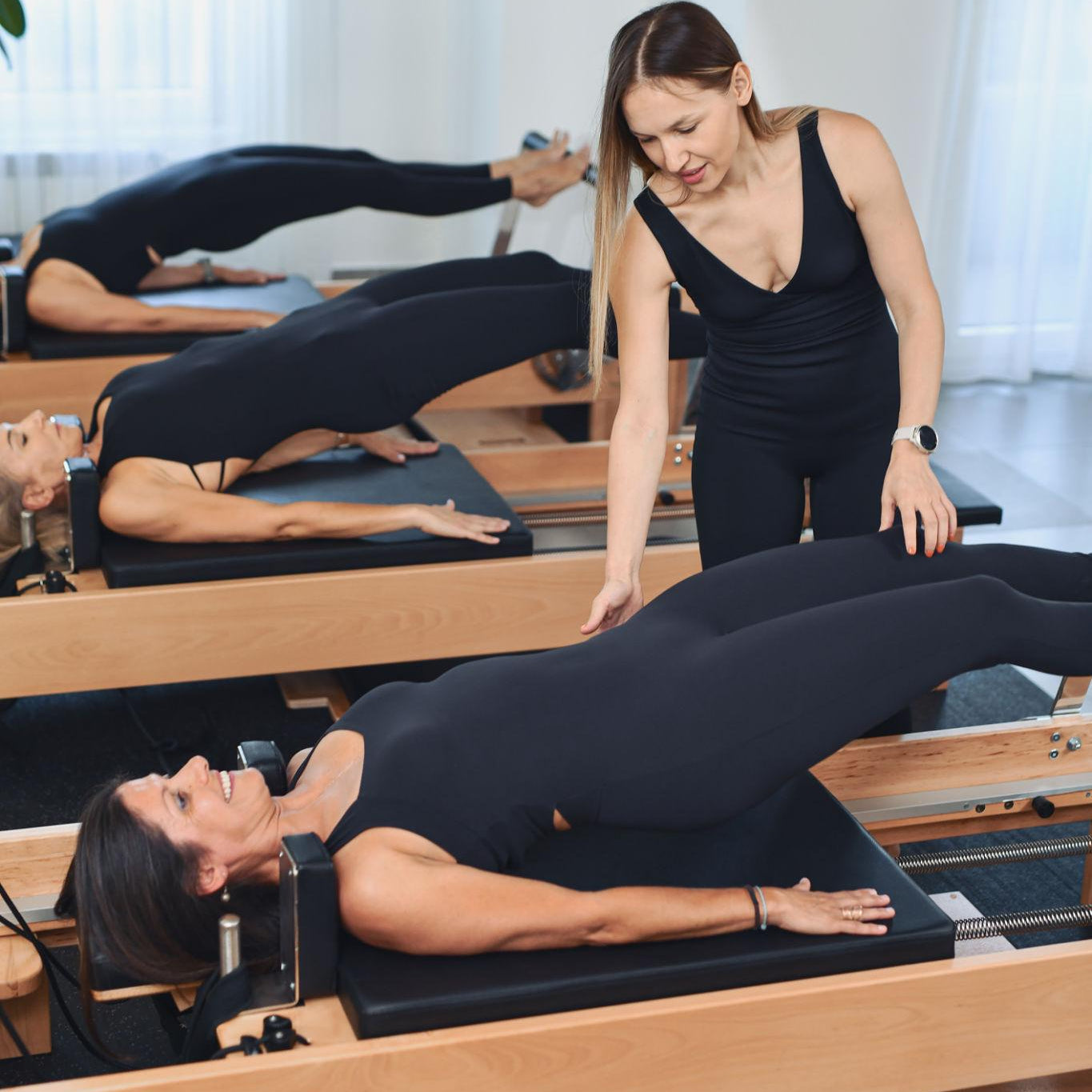
Reformer Pilates has a reputation for being low-impact, beginner-friendly, and great for everything from posture to core strength — but is it actually suitable for everyone?
If you’ve ever wondered whether certain injuries, medical conditions, or fitness levels might make Reformer Pilates Machines unsafe, you’re definitely not alone.
The truth is, while reformer Pilates can be incredibly beneficial, there are some situations where modifications, medical advice, or extra caution are important. Keep reading as we break down who should be careful with reformer Pilates, when it may not be the right fit, and how to know whether it’s safe for your body and goals.

When to be careful with Pilates
Reformer Pilates is not suitable for everyone. Some medical conditions and physical limitations can increase the risk of injury. It’s important to understand these before starting.
Severe Osteoporosis and Bone Density Issues
Bone density plays a big role when using a reformer. If you have severe osteoporosis, certain movements may increase the risk of fractures. These precautions are in place to protect your bones.
Unstable Cardiovascular Conditions
If you have uncontrolled heart conditions, exercise can place extra strain on the body. Some movements and positions may not be safe. Always seek medical advice before taking part.
Recent Surgery or Acute Injuries
If you have recently had surgery, your body needs time to heal. Starting too soon can slow recovery or cause complications. Always get medical clearance before returning to exercise.
Herniated Discs and Severe Sciatica (Acute Phase)
Back conditions such as herniated discs or sciatica can worsen with resistance-based movement. This is especially true during flare-ups. Extra care or rest may be needed during this time.
Advanced Pregnancy (Post-First Trimester without modifications)
Pregnancy changes how your body moves and responds to exercise. Some positions may not be safe without modification. Always check with your GP and work with a trained instructor.
Severe Arthritis or Inflammatory Joint Flare-ups
Inflamed joints can be sensitive to resistance and movement. Certain exercises may increase discomfort during flare-ups. Adjustments are often needed to reduce strain.
Respiratory Conditions (COPD or Unmanaged Asthma)
Breathing is a key part of Pilates. If you have a respiratory condition, this can make sessions more challenging. Proper guidance is important.
High Blood Pressure and Vertigo/Dizziness
Changes in position and controlled breathing can affect blood pressure. Some people may feel lightheaded or dizzy. This should be managed carefully.
Neurological Disorders affecting Balance
Conditions that affect balance or coordination can make the reformer harder to use. The moving carriage adds another layer of difficulty. Extra support may be required.

Reformer Pilates vs. Mat Pilates: Safety Differences
Why the Reformer Machine Requires Extra Caution
Understanding how the reformer works is key. The machine uses springs, pulleys, and a sliding carriage. This adds complexity compared to mat Pilates.
Lack of Body-Breath Connection and Coordination
Beginners may find it difficult to match movement with breathing. This can affect control and form. Guidance helps reduce this risk.
Complexity of Spring Resistance and Moving Carriages
The adjustable resistance can be useful, but also harder to manage. Without experience, it may feel unstable. Learning gradually is important.
Risk of Strains from Improper Form on Equipment
Incorrect positioning on the machine can lead to strain. This risk is higher than on a mat. A qualified instructor can help correct your form.
How to Safely Start Pilates with Health Concerns
Essential Steps Before Your First Class
Starting a new routine means understanding your body. Taking a cautious approach will help you stay safe.
When to Seek Medical Clearance (GP or Specialist)
Always speak to your GP or a specialist if you have concerns. This is especially important for existing conditions or injuries.
The Importance of a Qualified Instructor
A qualified instructor can adapt exercises to suit your needs. They will also help you maintain proper form. This reduces the chance of injury.
Choosing Private Sessions vs. Group Classes
If you are new or have health concerns, private sessions may be a better option. They allow for more personalised guidance. This can build confidence early on.
Listening to Your Body: Knowing When to Stop
Never ignore pain or discomfort. Stop if something does not feel right. It is always better to be cautious than push through.
------
The information provided in this blog is intended for general educational and informational purposes only and should not be considered medical, fitness, or professional advice.
Always consult with a qualified healthcare professional, physiotherapist, doctor, or licensed Pilates instructor before starting any new exercise programme, particularly if you have an existing injury, medical condition, pain, or health concerns.


