

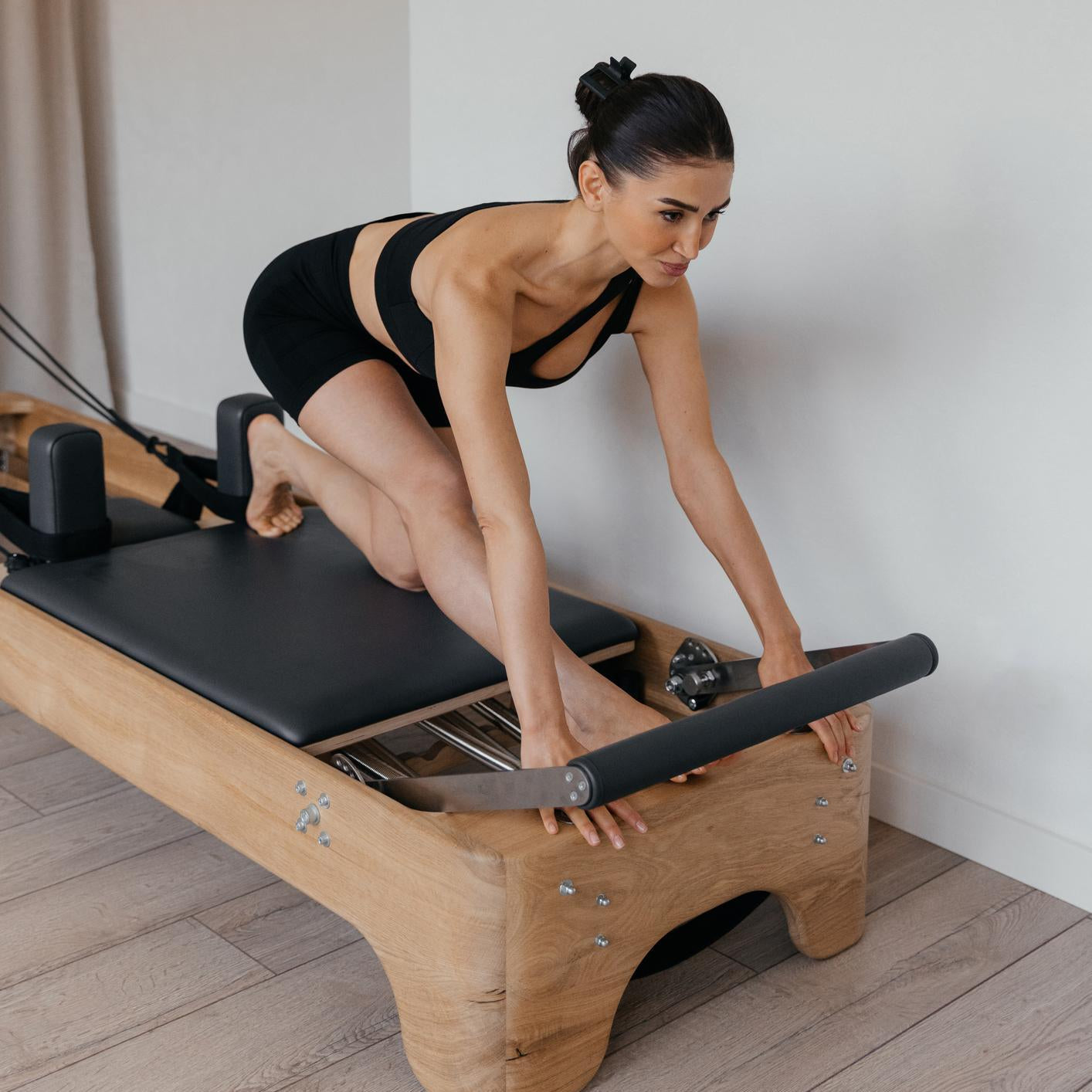
If you’ve ever looked at a sleek reformer machine and thought, “That looks terrifying,” while also wondering whether mat Pilates is actually enough to get results, you’re definitely not alone.
The truth is, both styles have their own benefits, challenges, and surprisingly loyal fan clubs. Some people love the burn and support of Reformer Pilates Machines, while others swear by the simplicity and accessibility of mat work.
So, which one is actually right for you? Keep reading and we’ll break down the real differences, who each workout suits best, and how to choose the option that fits your goals, lifestyle, and body best.

How is Reformer Pilates different from Mat Pilates?
Understanding the Equipment: The Reformer Machine vs. The Mat
Springs, Pulleys, and Adjustable Resistance
If you’ve ever walked into a Pilates studio and immediately been slightly intimidated by the giant bed-looking machine with straps hanging off it… welcome to the club. That’s the reformer machine.
It uses springs, pulleys, and a sliding carriage to create resistance, which means your workout can be adjusted to match your strength and fitness level. One of the reasons people love Reformer Pilates Machines is that they make movements feel supported while still seriously challenging your muscles (sometimes in ways you weren’t emotionally prepared for).
The best part? The resistance is controlled, so you can progress gradually without feeling thrown in at the deep end.
Using Your Own Body Weight for Resistance
Mat Pilates keeps things much simpler. No springs, no moving carriage, no straps — just you, a mat, and your own body weight.
That might sound easier… but don’t be fooled. Without the support of a machine, your muscles have to work hard to keep you stable and controlled throughout each movement. It’s amazing for building body awareness, balance, and deep core strength.
Also, there’s something quite satisfying about realising your abs can shake while doing a movement that barely looks like movement at all.
Core Principles and Origins
Joseph Pilates and the Foundation of the Method
Whether you choose reformer or mat Pilates, both styles come from the same place. They were created by Joseph Pilates, who believed movement should strengthen the body while improving posture, flexibility, and control.
The goal was never just to “work out.” It was to move better, feel stronger, and create a healthier relationship with your body overall.
Breath, Control, and Centering in Both Practices
Both methods focus heavily on breathing, control, and core engagement. Pilates isn’t about rushing through reps or collapsing dramatically onto the floor afterwards.
Instead, every movement is slow, intentional, and controlled. It’s very much quality over quantity, which is why Pilates can look gentle from the outside while secretly setting your muscles on fire.
Over time, this mindful style of training improves posture, coordination, and overall body awareness.
Is Reformer Pilates More Effective Than Pilates?
Why the Reformer May Build Muscle Faster
If your main goal is strength or muscle toning, the reformer definitely has an edge for some people.
The adjustable springs allow you to increase resistance in a very controlled way, which can help build lean muscle and strength faster. It also adds variety to movements, which keeps workouts challenging and engaging.
A lot of people find reformer sessions feel more “full body” compared to traditional workouts, especially once the resistance increases.
Mat Pilates for Deep Core Stability and Posture
That said, mat Pilates absolutely holds its own. Because there’s no external support, your body has to stabilise itself the entire time.
This builds incredibly strong deep core muscles and can do wonders for posture, alignment, and overall body control. It’s often less about “big” movements and more about learning how to properly activate muscles you didn’t even know existed.
Rehabilitation and Injury Prevention
How the Reformer Supports Limited Mobility
One thing reformers are brilliant for is support. The machine guides movement in a way that can feel safer and more controlled, especially for beginners or people recovering from injuries.
Because the carriage moves with you, exercises can feel smoother and lower impact on joints while still building strength.
Low-Impact Benefits for Joint Longevity
Both mat and reformer Pilates are known for being gentle on the joints, which is one of the reasons people stick with Pilates long term.
You can improve strength, flexibility, posture, and mobility without constantly battering your knees, hips, or lower back in the process.
Accessibility and Lifestyle Factors
Comparing Class Costs and Studio Fees
This is where reformer Pilates becomes slightly less fun: the price.
Because reformer classes require specialised equipment and smaller class sizes, they’re usually more expensive than mat sessions. In the UK especially, reformer studios can feel very boutique (and sometimes priced accordingly).
That said, many people feel the structure and support of reformer sessions make the investment worthwhile.
The Portability of Mat Pilates for Home Workouts
Mat Pilates wins easily when it comes to convenience. All you really need is a mat and enough floor space to lie down without kicking furniture.
You can do it at home, at the gym, while travelling, or even squeezed into your living room between meetings. It’s flexible, accessible, and much easier to fit into busy schedules.
Is Reformer Pilates More Difficult Than Pilates?
Mastering Foundational Movements on the Mat
A lot of beginners assume mat Pilates will be easier because there’s no machine involved. Then they try it.
Without external support, even basic exercises can feel surprisingly challenging. Your core and stabilising muscles are working constantly, which is why mat Pilates often delivers that deep “wow I really feel that” kind of burn.
Navigating the Technical Complexity of the Reformer
The reformer, meanwhile, has a slightly steeper learning curve at first. Between the carriage, straps, springs, and moving parts, there’s definitely a moment where everyone wonders if they’re operating gym equipment or preparing a spacecraft for launch.
But once you get comfortable with it, the machine actually helps guide movement and improve form.
Resistance vs. Stability: Which Challenges You More?
Why Mat Pilates Can Feel More Intense for the Core
Mat Pilates can feel deceptively difficult because your body has to stabilise itself through every movement.
There’s nowhere to hide, which means your core stays switched on almost constantly.
Progressive Overload on the Reformer Carriage
The reformer creates challenge in a different way. By adjusting spring resistance, you can progressively overload muscles and continue building strength over time.
This makes it particularly effective for endurance, toning, and full-body conditioning.
Can You Do Both?
Honestly? You don’t necessarily have to choose.
Reformer Pilates is fantastic for guided resistance, strength building, and variety, while mat Pilates offers simplicity, flexibility, and incredible core stability work. They each bring different benefits to the table.
In reality, many people find the best approach is combining both. Reformer sessions can build strength and control, while mat Pilates improves stability, posture, and body awareness. Together, they create a balanced routine that supports long-term fitness, mobility, and overall wellbeing.


