

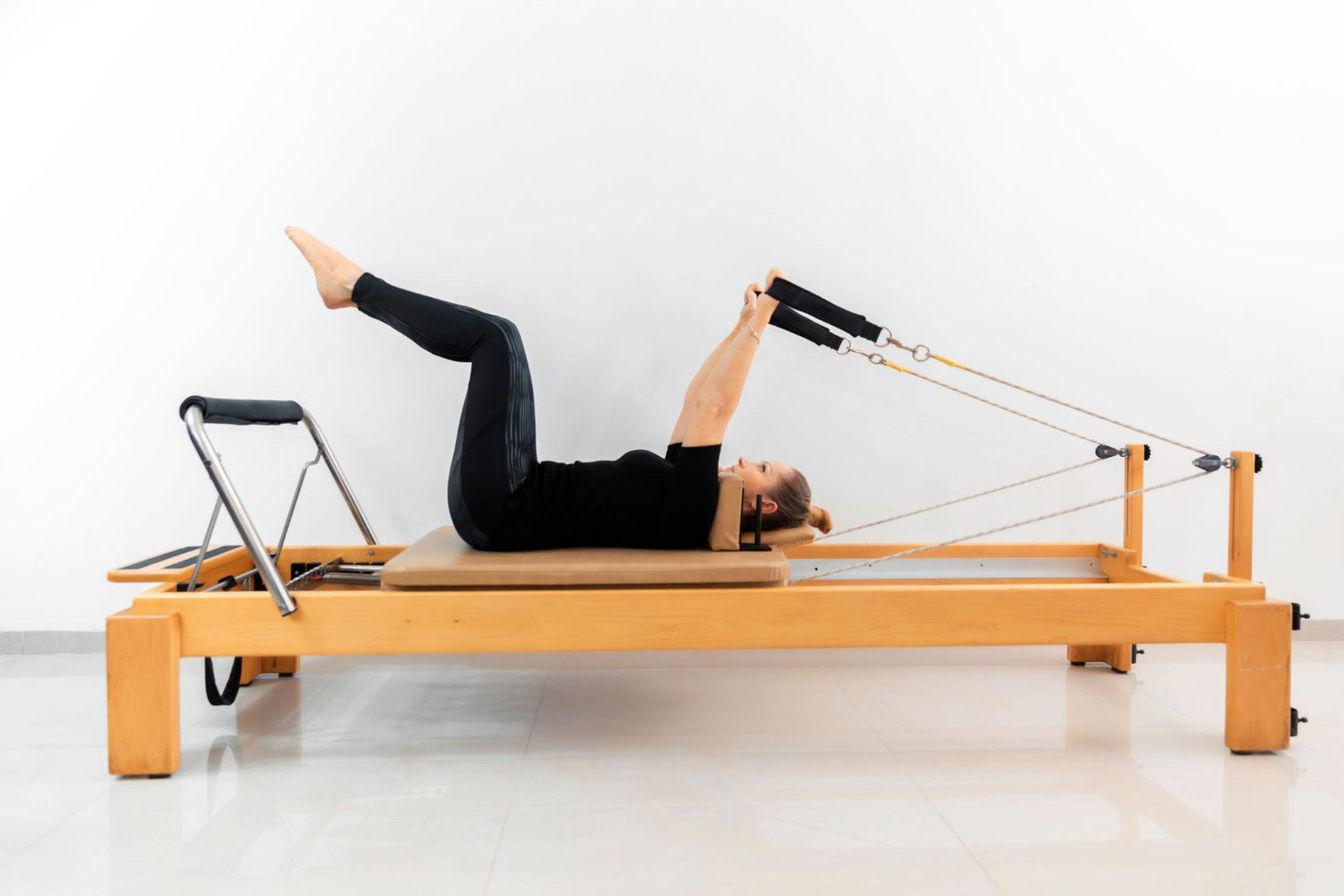
Ever feel like you’re doing loads in Pilates but seeing little change? The 80/20 rule flips that.
What is the 80/20 rule?
Well, 20% of key moves drive 80% of results. Whether using Reformer Pilates Machines or mats, focus matters.
Keep reading to train smarter, not longer, and see real progress faster.

What is the 80/20 rule in Pilates?
Many fitness lovers in the UK look for better ways to train. You might ask, what is the 80/20 rule in Pilates? It means a small part of your exercises brings the biggest benefits.
By choosing key exercises, you can change your body faster. Efficiency is key when you focus on doing a few things well. This rule helps you make your workouts count more, reaching your goals sooner.
Using this approach, you can get strong results while keeping a good work-life balance. Working smart, not hard, supports long-term progress.
Applying the Pareto Principle to Your Practice
Working smarter, not harder, is key to a lasting fitness routine. This idea comes from Vilfredo Pareto, who found that most results come from a small portion of effort.
In Pilates, this means focusing on the most impactful movements. These exercises improve core strength and control without wasting time on less effective work.
Why 20% of Exercises Deliver 80% of Your Progress
The 80/20 rule shows that not every exercise gives equal results. A small number of movements drive most of your progress.
By identifying these, you make your Pilates sessions more efficient and focused.
Mastering Foundational Movements Over Complex Variations
To get the most from your Pilates workout, stick to key exercises that work your whole body.
Mastering the basics builds a strong base. This makes it easier to progress to more advanced movements later.
Focusing on Quality Repetitions vs. High Volume
Quality matters more than quantity. Controlled, precise repetitions improve your Pilates technique faster than rushing through sets.
This approach helps you avoid strain while still building strength.
The 80/20 Ratio: Balancing Strength and Flexibility
A well-rounded routine combines strength and flexibility. You build core stability while improving movement range.
This balance keeps your body both strong and mobile over time.
Why 80% of Your Session Should Focus on Stability
Most of your workout should target stabilisation. This builds deep core strength and supports better posture.
It also forms the base for all other movements.
The Role of the Final 20% for Mobility and Recovery
The remaining portion of your session should focus on stretching and mobility.
This supports recovery, improves flexibility, and keeps your joints healthy.
Effort vs. Intensity: The Mental 80/20 Rule
The 80/20 rule also applies to your focus. It is not just about movement, but how you approach each session.
Dedicating 80% of Your Focus to Form and Breath
Most of your attention should go to form and breathing. This strengthens the mind-body connection.
It helps you move with control and purpose.
Using the Remaining 20% for Movement Intensity and Challenge
The final part of your effort can go towards intensity. This includes adding resistance or trying harder variations.
This keeps your workouts challenging without losing control.

Benefits of Using the 80/20 Rule for Faster Results
Using the 80/20 rule changes how you approach your routine. It helps you focus on what truly matters.
Increased Efficiency and Time Management
By simplifying your workouts, you make better use of your time.
Getting a Full-Body Transformation in Shorter Sessions
Choosing a few key exercises can deliver strong results without long sessions.
Every movement has purpose.
Identifying Your Personal "High-Return" Movements
Tracking your progress helps you find which exercises work best for your body.
These become your go-to movements.
Preventing Overtraining and Reducing Injury Risk
Consistency matters more than pushing too hard.
Avoiding Burnout Through Controlled Intentionality
Focusing on quality reduces fatigue and keeps you motivated.
It helps you avoid burnout over time.
Protecting Joints by Prioritising Deep Stabilising Muscles
Strong stabilising muscles protect your joints and reduce injury risk.
This is key for long-term progress.
Improving Mind-Body Connection and Precision
Pilates is not just physical. It is also about awareness.
Why Concentration Yields Better Results Than Momentum
Moving with control is more effective than rushing.
It improves both strength and coordination.
Developing Conscious Alignment in Every Repetition
Paying attention to alignment improves posture and movement patterns.
This carries into daily life.
How to Implement the 80/20 Rule in Your Next Session
Start by reviewing how you currently train.
Practical Steps for Beginners and Pros
This method works for all levels.
Auditing Your Current Routine for Maximum Impact
Look at your weekly sessions. Identify which exercises give you the best results.
Focus more on these and remove unnecessary movements.
Incorporating "Quality Over Quantity" into Mat and Reformer Work
Apply this approach whether you train on a mat or with Reformer Pilates Machines.
Controlled movements and proper form should always come first.
Related Frameworks: How it Differs from the 3-2-1 Pilates Method
Different methods can complement each other.
Understanding Frequency vs. In-Session Focus
The 80/20 rule focuses on what you do within a session.
Other methods may focus on how often you train.
Combining Multiple Principles for a Well-Rounded Routine
You can combine different frameworks to build a balanced routine.
The key is to stay consistent and focused on what works best for you.
In summary...
The 80/20 rule in Pilates is about focusing on the exercises and habits that deliver the greatest impact. Rather than spending hours doing endless repetitions, prioritising high-value movements, proper form, and controlled breathing can help you achieve better strength, posture, flexibility, and core stability in less time. Whether practising on mats or using Reformer Pilates Machines, this approach encourages smarter, more intentional training that supports long-term progress while reducing the risk of burnout and injury. By concentrating on quality over quantity, you can build a more effective and sustainable Pilates routine that delivers real results.


